

-
Lathe transportation may be required when a company is expanding or simply relocating to a new site.
Transporting production equipment on your own is quite difficult and requires knowledge of many nuances.
Our company’s core activity is the installation and dismantling of industrial equipment, as well as transportation, connection, maintenance and modernization.
In particular, our specialists are experienced in the full range of works related to installing or transporting a lathe.
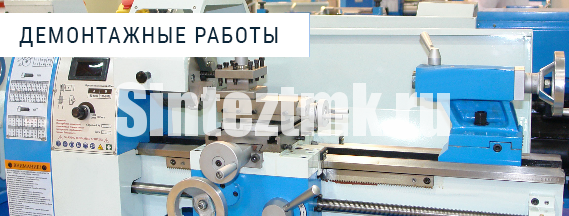
Lathe dismantling
Dismantling a lathe is required due to wear or relocation.
If the equipment is to be moved, dismantling must be carried out correctly, without damaging the mechanism and preserving all necessary parts and components. For this it is important to engage specialists.
Lathe dismantling consists of the following stages:
The main goal of dismantling a machine is to preserve the operational properties of all its elements.- The equipment is disconnected from the utility networks;
- Light units and assemblies that can be removed by hand are detached;
- Heavy parts are dismantled using rigging gear (winches, jacks, lifting platforms);
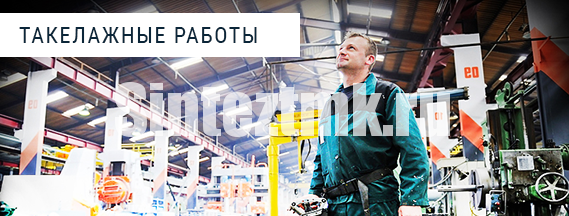
Lathe rigging
Rigging works include loading, moving and unloading the equipment.
A lathe is heavy, so technical safety rules must be observed during the works.
Lathes weigh from 300 kg to 5 tonnes.Before starting the rigging, precise technical calculations and measurements of the units and openings must be made, and the equipment specifications taken into account. A transport plan is drawn up so as not to clutter the area where the lathe is to be installed and not to paralyse production.
Our experienced specialists will carry out professional lathe rigging using lifting equipment and gear (turnbuckles, ropes, belts, slings, chains, trolleys, forklifts and truck cranes).
Basic rules of rigging works:
- The working area must be equipped with decking and racks for spare parts;
- Large parts are framed with a wooden frame and marked with signal flags;
- Moving units are fixed in a static, immovable position;
- Auxiliary parts (nuts, fasteners) are packed in separate bags with tags.
Lathe transportation
Transporting equipment involves difficulties and has its specifics. It is important to secure the moving parts of the machine correctly; some elements have to be transported separately.
Features of lathe road transportation:
Our specialists will deliver the lathe professionally and to a high standard, with a guarantee of equipment safety.- Special outfitting of the vehicle with braces or mounting profiles;
- Availability of gear for securely fastening the equipment;
- Fastening is done with special belts diagonally for stability;
- Observing the speed limit (under emergency braking, a heavy load can change the vehicle trajectory);
- Use of low-profile trailers to ease loading and unloading.
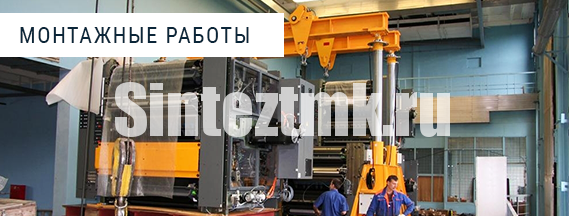
Lathe installation
For machine installation, a concrete foundation must be laid in advance, 30 days before operation. The installation height of the lathe must be calculated in accordance with the Operating Manual.
If necessary, our specialists will install the lathe on vibration mounts.The scope of lathe installation services also includes:
- On-site assessment at the installation location;
- Calculation of the foundation for the lathe;
- Preparation of installation drawings;
- Pouring the foundation for the machine;
- Levelling the equipment with a spirit level;
- Setting the lathe onto the foundation.
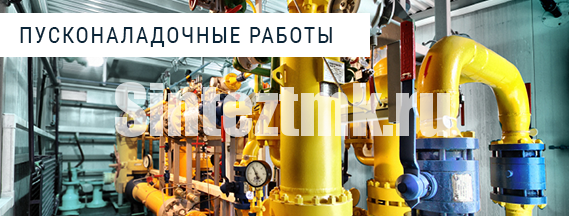
Lathe commissioning
Uninterrupted operation of the equipment depends on correct connection to the utility networks. The motor power is taken into account and the datasheet is studied carefully.
The machine is then tested at idle. The equipment must not shake and must run smoothly. Its operation is checked against the datasheet: spindle rotation speed, carriage feed, etc. must match the figures in the documentation. Our workers will connect the machine to the networks and carry out testing.
For the equipment to last long and avoid downtime, it must be serviced on time. There must be sufficient tooling, oils, spare parts, blanks and so on.
Our specialists will perform lathe maintenance, namely:
To increase the power and speed of the machine, modernization is applied: replacing old equipment with new, or fitting additional devices and replacing parts to improve performance.- Periodic lubrication;
- Replacement of used oils;
- Cleaning of the equipment;
- Troubleshooting by replacing broken parts.

Regulatory documents
Regulatory documents to be followed for dismantling, rigging, transportation, installation and commissioning:
SNiP 3.05.05-84 Process equipment and process pipelines
We professionally carry out lathe rigging in Moscow and the Moscow region, and we also have partners across Russia and the CIS; we will also dismantle the lathe, install its foundation, and perform its maintenance and modernization.