

-
Hammer installation, as well as transportation and dismantling is one of the popular services in the metallurgical industry.
Among forging and stamping equipment, hammers occupy a special place due to their power and economy. These machines use the kinetic energy of the impact to give the metal workpiece the desired shape.
As an energy carrier in hammers, air or steam coming from compressors or steam stations is used, therefore, the hammers installed in the shops are called steam-air. In contrast, pneumatic hammers work exclusively on compressed air, transferring the force from the compressor piston to the working piston.
Depending on the purpose of hammers are divided into several types:
- Forges, used for the manufacture of various forgings of metal and stamping using lining stamps;
- Stamping perform volume stamping, when the stamps can be open or closed;
- sheet stamping for stamping sheet metal;
- Pulled when the product is obtained after a series of strokes.
Hammers have a large weight and dimensions, because their transportation can be complicated and require a special approach. Sintez TMK has the necessary resources for hammer rigging and has experience in transporting such equipment.
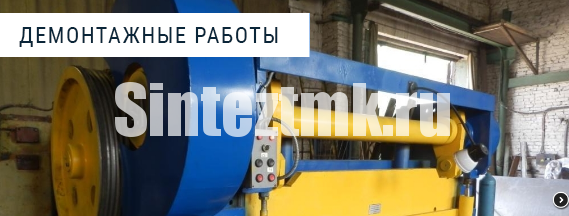
Hammer removal
There are many models of hammers, differing in size and weight. Some models have compact dimensions, and for their transportation it is enough to undock the wall from the foundation. It is much more complicated with equipment, the weight of which is not one dozen tons. In this case, the dismantling of the blacksmith hammer will be longer and more difficult.
Disassembly of the stamping hammer, the weight of which sometimes exceeds 50 tons, may be problematic. The degree of dismantling of the equipment depends on the tasks. Such work may be necessary in the organization of rigging, when you need to take into account the possibility of loading and transportation of units and their components. If the dismantling of the hammer is necessary during repair work, the main task is to replace worn or damaged parts. In this case, a complete disassembly may not be necessary.
To carry out work, lifting equipment, talismans, winches are necessary. It is important to separate large and heavy parts, the movement of which will require a different approach.
The main stages of work on dismantling the hammer:
- Disconnection of the hammer from the power supply, dismantling of ducts, control mechanisms, disconnection from the lubrication system;
- Cylinder covers, hatches are removed, the fastening is weakened and the woman is removed;
- The compressor is disconnected;
- Pneumatic cylinders, rods, upper plate are dismantled;
- Disassembly of racks is carried out, flooring is prepared, foundation bolts are cut off if necessary;
- The mill rises with the help of jacks or cranes and moves to a separate site;
- The hammer shabbot is dismantled, the underside plate is removed.
All components and details are numbered, the order of disassembly is recorded in detail, since information will be needed during installation. Packaging and preparation of the dismantled unit for transportation.
For each model, the order and degree of dismantling of the hammer is determined by the organization performing the work. It is important at the preparatory stage to develop a detailed disassembly scheme, which will help to perform all operations quickly and without failure.
Hammer rigging
The whole range of works on transportation of equipment should be carried out only by specialists with relevant experience. Closely related to the dismantling and installation of hammer rigging. The company has all the necessary types of transport and lifting mechanisms, with the help of which certified riggers will deliver the most complex unit to the installation site.
Only if the customer provides complete and reliable information about the cargo being transported and the conditions of its loading and unloading can an RRP be compiled that optimally takes into account all the nuances and ensures economical and safe delivery to the destination.
Hammer transportation can vary depending on many factors, and usually involves several steps:
- Drawing up a work plan, choosing the optimal route, providing the necessary mechanisms.
- Selection of a slinging scheme that provides reliable fastening and stability during lifting and moving.
- Lifting the hammer and the wall, installing them on the selected vehicle.
- Transportation to the installation site. This stage may include overloading in the event of a change in mode of transport. When transporting a hammer, all its parts must be securely fixed, snugly adjacent to the platform or body.
- Unloading at the destination and moving to the installation site.
- Installation on a pre-mounted foundation.
It is not allowed when laying a hammer on platforms of imbalance. At all stages, safety requirements are met, and hammer rigging is performed in accordance with the rules for the transportation of heavy and oversized cargo.
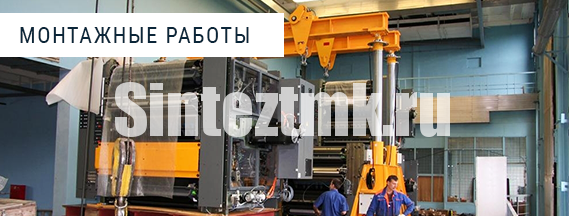
Hammer installation
For equipment that has moving parts, an important condition for normal operation is a reliable foundation, from the production of which the installation of the hammer should begin. All requirements and drawings for the installation of the foundation are indicated by the equipment manufacturer. The size and depth of the base can be different depending on the specific conditions, and most of all on the quality of the soil.
When installing a hammer on the foundation, the most responsible is the installation of a shabbot, under which a gasket of hard wood bars should be made. No deviation from the horizontal greater than 0.2 mm per metre shall be allowed. The accuracy of the installation is checked using the level.
Making the installation of a blacksmith hammer, you need to provide a reserve of 5-10 mm for shabbot. When installing, the lower edge of the box should be lowered compared to the ring mark on the bab. In the future, it will be equal to the risk and will be at the same level. Mounting the shabbot to the base is not made, and in the gap formed between these elements, the soil is filled. Installation of the shabbot during the installation of a pneumatic hammer is made using a crane.
The wall is installed on the foundation, while the foundation bolts must get exactly into the mounting holes. Next, concrete bolts are carried out, and wedges are driven between the stanina and the shabbot. The horizontality of the plate when installing a hammer is not so important. The main thing is to achieve an accurate installation of the base relative to the surface of the working cylinder.
Electric motor mounted. Connection to the power grid is made strictly according to the scheme, grounding is necessarily connected. It is necessary to check that the parameters of the electrical network correspond to the data specified in the passport.
The installation of the pneumatic hammer is completed by checking the correctness of the installation and reliability of the connection of various nodes:
- Freedom of rotation of the crankshaft;
- The presence of a ball valve in the working cylinder buffer;
- Combination of fighters.
In the working and compressor cylinders of the pump should be filled with oil. The oil pumping system is carried out manually without its receipt at lubrication points. After that, the oil lines are connected.
The first launch of the hammer after installation is idle, without load. If the equipment works normally for about 15 minutes, there is no vibration, noise or overheating of individual units, you can switch to forging mode and perform several test blows.
Professionals of Synthesis TMK will perform only the operations necessary for this model to dismantle the hammer until commissioning.

Hammer maintenance
Synthesis TMK services are not limited to equipment installation. The company’s specialists will carry out hammer maintenance after installation, as well as provide service support during its operation.
Such specific equipment requires special training of mechanics, and it is economically unprofitable for organizations to maintain workers of narrow specialization. The problem will be solved by hammer outsourcing, when all technical support will be delegated to a professional hammer service company.
In case of any equipment malfunctions, you can call a mechanic who will test all the details, identify the cause and eliminate the malfunction. In addition, he will carry out hammer maintenance, check the lubrication and condition of the buckets.
Without constant maintenance, the life of the equipment will be significantly reduced. If you do not carry out maintenance of the hammer, its parts wear out ahead of time, which can lead to accidents. It is possible to conclude an agreement under which the specialists of TMK Service will carry out maintenance, check in what condition piston rings, if necessary replacing them with new ones, control the tightening of nuts on the rod head, pour oil into the system.
It is necessary to constantly monitor the condition of the surfaces of the woman, pistons, box. If scratches appear on them, bullies may occur during the operation of the equipment. A specialist, carrying out hammer service, will remove all irregularities with sandpaper or a small file. He will pay attention in time to the appearance of an uneven gap between the lower and upper blinks, causing the eccentricity of the blow, and correct it.
Workers do not always pay attention to extraneous noise when forging. Meanwhile, knocking in the cylinders or overheating of bearings can signal a serious malfunction, which will reveal the master conducting hammer maintenance.
If the equipment is not paid attention, even a small malfunction will lead to a serious accident, and repairing the hammer will cost much more than its maintenance. The full range of services is provided by specialists of Synthesis TMK, cooperation with which will guarantee the quality of the hammer.