

-
At production enterprises where gas is used in the work of technological equipment, gas pipelines are installed for its supply and discharge at the stage of construction or reconstruction of workshops.
Taking into account the characteristics of production and correct calculations ensure the safe functioning of the enterprise. When developing the project and assembling the structure, the purpose, operating conditions and requirements for gas pipelines from the equipment manufacturer are taken into account.The problem of gas withdrawal arises during the operation of petrochemical, chemical, metallurgical, coke-chemical, energy enterprises. There is it in the engineering and construction industry, in the production of rubber, building materials, food products. Gas pipelines have different technological purposes and are used for transportation to combustion devices of combustible gaseous materials and removal of combustion products.
Methods of laying pipelines
Pipeline layout and layout are selected for safety, ease of assembly and maintenance reasons. There are different requirements for laying above-ground gas pipelines, inter-shop, ground, hidden, intra-shop. When developing the project, the type of gas transported (domain, coke, ferroalloy and others), pressure and temperature, diameter and length of the pipeline are taken into account. At the place of installation and laying, an internal gas pipeline located in one or adjacent premises of the equipment and an external one connecting several individual buildings or enterprises are installed.
Gas vents are divided into workshopIf more than two workshops are connected and in-house.
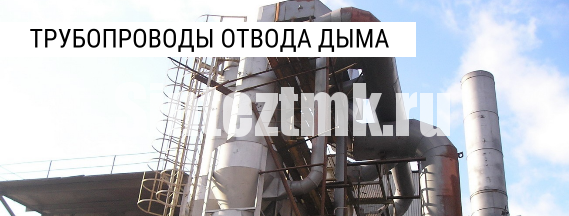
Smoke removal pipes
To remove smoke from technological equipment is used chimney: brick, metal, reinforced concrete, smoke is transmitted to them through gas pipelines.
It is possible to use a single-barreled design, when one pipe is used to eject gas, or a multi-barreled one. The height of the trunks is often several tens of meters. The design is subjected to external loads from wind, temperature changes, precipitation, while experiencing the effects of heated gases. The pipe must be sufficiently strong, resistant to corrosion, gastight. The use of fiberglass in the manufacture increases reliability and simplifies the manufacture and installation of chimneys.
The pipeline material withstands high exhaust gas temperatures, often exceeding 300 °C. Heat loss is reduced due to the use of thermal insulation, the parameters of which when exterior pipe laying are selected in accordance with the technological process and safety considerations.
For internal networks at temperatures above 45 °C, gas pipeline isolation is mandatory.
For pipelines, materials that do not emit harmful substances and meet sanitary standards are used.
Outlet gas pipelines for technological equipment ensure the use of the resulting gases for heating, steam formation, in the production of electricity, for production needs. They also deal with environmental issues.For enterprises of various industries, according to GOST 17.2.3.02-2014 “Rules for establishing permissible emissions of pollutants to industrial enterprises” maximum permissible emission standards are calculated, but the content of harmful substances in exhaust gases is higher. Combustion products do not immediately enter the atmosphere, but are transported to treatment plants and further processing.
Tightness is the main condition of the system, which ensures normal traction in the pipeline and excludes the entry of harmful substances into the room. All technological openings should be tightly closed.
For cleaning of gas vents, hatches with covers are provided, allowing access to horizontal and vertical areas for monitoring the condition and removal of combustion products.
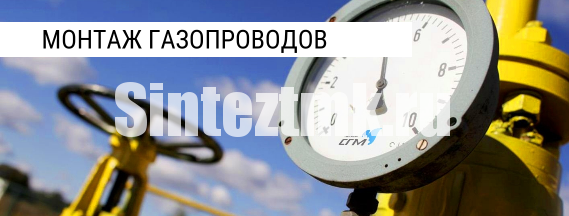
Gas pipeline installation
Installation of the gas pipeline is carried out on the basis of project documentation. By the beginning of the work, the site of its installation (topographic plans of the site, full information about the building, floor plans, sections, features of technological equipment) is analyzed, taking into account the purpose and operating conditions. For the design of external gas pipelines, environmental, geodetic, engineering and geological studies are necessary, for internal ones, you will need a technical conclusion on the examination of an existing building, made according to SP 13-102-2003 “Rules for the examination of load-bearing building structures of buildings and structures” with a SRO certificate or a license organization.
At the design stage, approvals are carried out in the Federal Service for Environmental, Technological and Nuclear Supervision (Rostekhnadzor). By the beginning of installation, Rostekhnadzor’s instructions are eliminated and taken into account in the project documentation. Requirements for specific types of pipelines are specified in the “Recommendations for the installation and safe operation of process pipelines”. On the basis of the initial data, the necessary calculations are performed, the project is developed and coordinated, the installation of gas pipelines is compiled, the need for equipment is determined, installation, acceptance tests, commissioning is performed, then personnel who have the qualifications required for the operation of the facility are selected or trained.
Features and differences
When laying external and internal pipelines, it is necessary to take into account the characteristics of the transferred substance, its aggressiveness, temperature, pressure. Depending on these parameters, the design requirements differ, completeness and materials used are selected.
With a small diameter or a large length of the pipeline, fans are used to increase the pressure and speed of the gas. But with sufficient dimensions of the pipe over time, its section decreases due to the accumulated soot and soot on the walls. In the pipeline, it is necessary to maintain a constant gas pressure, which is achieved when using fans and flues. It is necessary to periodically clean the pipelines, otherwise the flow of gas will be insufficient, which will lead to gas contamination of the room and will be dangerous for people.
During the construction of above-ground gas pipelines, as well as during the installation of main gas pipelines, pipes of carbon, stainless, alloy steels are used, the brands of which are selected according to SP 42-102-2004 “Design and construction of gas pipelines from metal pipes”. For seamless and electric welded pipes, the diameter and thickness of the wall are calculated depending on the requirements of the technological process.
Pipes inside the shops and gas pipelines of furnaces are exposed to high temperatures and are made of high-alloy steels of grades KhN32T or 05HN60VT according to GOST 5632-2014 “Legal stainless steels and alloys corrosion-resistant, heat-resistant and heat-resistant”. Marky. Pipelines made of copper and polyethylene are used if the pressure in the system is less than 0.1 MPa
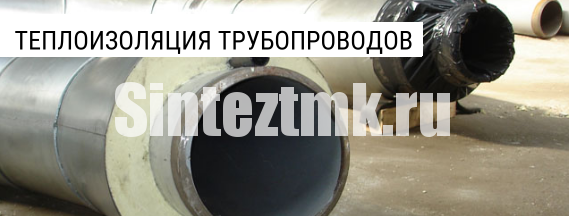
Thermal insulation of the pipeline
The technology of gas pipeline laying to reduce heat loss involves the use of insulating materials. Insulation consists of cover and thermal insulation layers, between which a vapor insulation layer can be added. When installing external gas pipelines, special pipes in the shell are used, covered with galvanized sheet, insulation with non-combustible lamella mats or cylinders foiled with aluminum. Thermal insulation material ensures the preservation of heat, eliminates the formation of condensate during operation in conditions of constant temperature drop and cold climate.
To take into account all the requirements of reliability and safety, actions are coordinated at any stage from design to installation of the gas drain. Assembly operations are carried out by qualified workers with appropriate tolerances and certificates, and quality control of welded joints is performed by specially certified laboratories. Only an integrated approach will allow you to perform high-quality work and put the facility into operation on time.
To effectively perform the assembly and obtain a workable system requires experience, specially trained personnel with the necessary experience, received the appropriate tolerances.
The work takes a long time and is carried out in several stages:- Preparation of the task, collection of initial data. At this stage, an examination of the territory and building, where gas vents and pipelines will pass, the determination of the features of the relief, the influence of objects located on the site, the nearest smoke pipes are selected.
- The development of a project that determines the length and configuration of vertical and horizontal gas pipelines is necessary for the manufacture of assemblies and parts, structures for its installation, and the compilation of PP. The project is coordinated in Rostekhnadzor.
- Construction of a system for gas drainage, laying pipes, installation of fittings and devices.
- Registration of executive documentation, start-up and adjustment.
- Testing and commissioning of the facility.
At all stages, the requirements for laying gas pipes are taken into account in accordance with the rules given in the order of Rostekhnadzor dated 27.12.12 No. 784 “Recommendations for the design and safe operation of technological pipelines.” Calculations are carried out based on the operating conditions of the pipeline, the characteristics of the transported substance. Determination of the height of the installation of pipelines, selection of thermal insulation material is carried out strictly in accordance with the regulatory framework and takes into account the requirements of the supplier of technological equipment.
Factors to consider when designing pipelines to drain gases:
- The pipeline must ensure the passage of gases along the entire height and length of the pipe, removing combustion products.
- It is necessary to create a “self-traction” effect. Calculations should take into account the features of the equipment.
- Pipelines are designed in different ways in each case, and require an individual approach in the development.
Mistakes and problems
It is important when installing a gas drainage system to correctly perform calculations, select material and equipment, comply with the rules of documentation and work regulations, which depends on the competence of the representatives of the customer, the design and installation organization. Errors in the performance of any of the operations affect the start-up and timely commissioning, safety and reliability of the system, obtaining the necessary permits, the number of orders from Rostekhnadzor during the operation of the facility.
Miscalculations and errors in the choice of design subsequently cause improper operation of gas drainage systems, frequent breakdowns, gas leaks, poisoning of personnel. This can lead to unforeseen consequences, additional costs for repair and operation, fines for increasing harmful emissions into the atmosphere. Professionally performed work will avoid losses.

Regulatory instruments
When performing the work, the existing industry standards apply:
- Safety rules for the operation of smoke and ventilation industrial pipes. PB 03-445-02 (cancelled from 2014, applies GOST 31937-2011 "Buildings and structures". Rules of inspection and monitoring of technical condition" taking into account Item 7 of the order of Rostekhnadzor N 538 of 14.11.2013 "Rules of carrying out examination of industrial safety").
- Rules of supervision, inspection, maintenance and repair of industrial smoke and ventilation pipes. SP 13-101-99
- Rules of examination of load-bearing constructions of buildings and structures. SP 13-102-2003
- Recommendations for the construction and safe operation of technological pipelines. Safety manual. Order of Rostekhnadzor No. 784 of 27.12. 2012
- Technological equipment and technological pipelines. SNIP 3.05.05-84
- Manufacturing, installation and testing of technological pipelines up to 10 MPa. PFN 362-87
- Design and construction of gas pipelines from metal pipes. SP 42-102-2004
- Alloyed stainless steels and alloys are corrosion-resistant, heat-resistant and heat-resistant. Marky. GOST 5632-2014
- Thermal insulation of equipment and pipelines. SNIP 41-03-2003
- Rules for establishing permissible emissions of pollutants by industrial enterprises. GOST 17.2.3.02-2014
- Instructions for anti-corrosion protection and repair of polymeric materials of industrial chimneys and other special high-rise reinforced concrete structures. SCH 344-75
- Safety rules in the gas industry of metallurgical and coke-chemical enterprises and industries. PB 11-401-01
- Manual for the operation of industrial smoke and ventilation pipes from 07.02. 1993
U Synthesis TMK Companies accumulated experience in designing and installing pipelines of any complexity. There is no need to involve several performers. Specialists of the company have the necessary certificates, certificates, they are qualified to work, make the necessary calculations, conduct acceptance tests and receive permission for commissioning.