

-
Transportation and installation of pumps and pumping stations is one of the popular services in the oil and gas industry and not only.
Pumping stations used at oil refineries, in addition to large sizes and increased capacity, ensuring the pumping of viscous substances, must be explosion-proof and have improved suction characteristics. Usually, for working with petroleum products, varieties of centrifugal pumps are used: voluminous twin-screw pumps with a double entrance, and osediagonal pumps.
In order to increase explosion protection in their design, the electric motor is directly connected to the pump without intermediate shafts. On sediagonal models, the working wheel has the shape of a profiled screw.
Centrifugal pumps are part of a block-modular pumping station, which also includes power cells, measuring equipment and a system for connecting to the pipeline. During transportation, all modules can be moved separately, which greatly facilitates the work of logisticians.
Dismantling of pumps and pumping stations
The order of disassembly of pumps depends on the reasons that caused it, and the design:
- Stationary or mobile type;
- Separate or joint placement of the pump and electric motor;
- Installed inside the building, external land or floating.
The degree of disassembly of the pump depends on the actions that will follow the dismantling:
- In preparation for repairs;
- For transportation to a new place for further operation;
- For recycling.
If the purpose of dismantling is to carry out repairs or maintenance, there is no point in completely dismantling the pump. All work is carried out with disconnected power supply. It is enough to provide access to the unusable part and remove it for replacement with a new one.
When dismantling for recycling, it is important to observe safety. Before the start of work, it is necessary to turn off the electric motor, and disconnect the pump from the supply and drain pipelines. There should be no liquid in the pump. Disassembly is made by sequential removal of covers, components, details. A cutting tool can be used during dismantling.
It is much more difficult to perform dismantling, ensuring further assembly and normal operation of the unit. In preparation for the work, a place is freed up for disassembly and placement of lifting equipment. If another pipe is installed on the incoming pipeline between the valve and the pipe, the pump cover can be opened without the need for dismantling work.
The modular pump station is dismantled by disconnecting the modules.
When disassembling the pump, the following actions are performed:
- The power supply is cut off;
- Through the drainage pipeline drains the working fluid from the pump;
- The inlet and outlet pipelines are disconnected;
- Measuring devices are dismantled, membrane dividers are undocked to remove the pressure gauge and manovacuummeter;
- Remove suction and pressure adapters;
- The clamps are disconnected and dismantled.
- drainage pipeline and drainage valve;
- disconnect the suction, installation and drain pipelines;
- Set the plugs on the suction and injection holes;
- On the frame, loosen the bolts, remove the pump, and then the casing;
- Dismount the clutch;
- Remove the pump body;
- Weaken the nuts and brackets at the junction with the snail housing of bearing supports, which can then be dismantled with the rotor.
All dismantling operations should be recorded in detail. If to move the pump station disassembly of the pump is not required, limit its disconnection from the engine and pipelines.

Tracking of pumps and pumping stations
When moving large pumping stations, rigging works are necessary. Preliminarily, a work plan is drawn up, in which the equipment and equipment necessary for lifting, loading and unloading is determined, the mounting and slinging schemes are given, the labor intensity of operations is calculated.
The pump manufacturer provides recommendations for the mechanization of loading operations. If necessary, when delivering the pump, a special tool is attached, for example, special keys for bolt connections, access to which is difficult.
Lifting machines will be required when performing labor-intensive operations, which include dismantling the pump, electric motor, pipelines and fittings. During rigging, hydraulic, portal lifts, bridge, tower, gantry cranes, winches jacks are used, the set of which depends on the size and features of the pump design. The load capacity of the used waists is selected in accordance with the weight of the parts. To fasten the pump, ropes, slings, ropes are used, driven into the ears located on the lid.
When moving the pump, a lining material is used, which may include rubber sheets and gaskets, cardboard, pressespan. Small and medium size pumps can be moved without dismantling. During rigging work, fixers or mounting bolts are installed on the rotating parts.
The pump is packed in boxes, using linings for packing density. All rigging equipment should be designed for the attached loads.
Transport of pumps and pumping stations
When transporting modular pumping stations, the dimensions of the modules usually allow loading to vehicles. Requirements are imposed on the quality of fastening and the horizontal location of the unit. Pumps are packed in boxes that are installed on the selected mode of transport.
For transportation of pumps of medium size, special cars with a flat platform and a built-in crane are used to ensure loading and unloading. The unit is installed on the linings on the platform, preventing dangling. If there is no possibility of using special vehicles, it is possible to transport pumps by on-board machines with a long body. At short distances, the movement of units can be performed on special sleds.
Large pumps, even in a partially dismantled state after packaging, can have large dimensions. In this case, transportation is carried out according to a specially drawn up transportation plan.
A route is being developed that allows the delivery of goods at the lowest cost. If necessary, several modes of transport and transshipment at the port or railway station are used. If justified, part of the journey takes place by ship by sea or river, or on railway platforms having a length of 18 meters.
In places of transshipment, the issue of the use of lifting equipment should be resolved in advance. Usually, at large points, overloading is carried out by cranes or lifts installed in ports or stations. If you need transshipment at a small, not equipped with special mechanisms station, take care of their presence in advance.
The ground part of the route is carried out on specialized vehicles designed for the transportation of oversized cargo. Boxes with pump components are installed on the site, strictly horizontally, avoiding gaps in the adjoining area, and are securely fixed.
The route is laid taking into account the characteristics of the terrain and traffic intensity and is coordinated with the road services. If necessary, escort of cars with special signals is ordered.
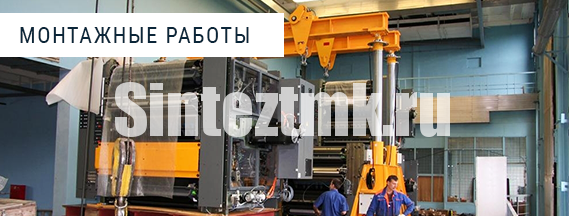
Installation of pumps and pumping stations
For the installation of pumps, a special platform is provided, where free access to lifting equipment and ease of work can be provided. The site should be located near the installation site of the unit so that its movement does not cause problems.
Before starting installation, it is necessary to carefully inspect all components and parts of the pump so that they do not have damage. If some parts are worn out or cause doubts about the performance, it is better to replace them. Bearing installation sites should be washed. There should be no bullies on the bushing and shaft. If they are found during the inspection, they should be cleaned.
Large pumps should be installed on a solid foundation. By the time the unit is delivered, the place for installation should be prepared, and the foundation is filled and dried. A frame is installed for fastening not too large pumps.
If transportation was carried out without disassembling the pump, its installation shall be carried out in the following sequence:
- The pump is attached to the frame, an electric motor is connected to it through a coupling;
- If the measuring instruments have been removed, they are installed together with the B&B shield;
- Connection to the suction line is made, connecting the pipeline with the suction window;
- A pipeline connecting the discharge window with the drainage pipeline is installed;
- Ball cranes are installed on both highways;
- The ground is connected to the engine, the power supply network is connected;
- Working fluid is supplied to the pump through pipelines.
Initially, a short start of the pump is made, allowing you to determine the direction of rotation of the rotor. If it does not coincide with the arrow on the engine, you need to change the current phases. If the arrow is not applied, the direction of rotation of the rotor should be clockwise when viewed from the engine.
If the pump was transported in disassembled form, its assembly is carried out in a sequence reversed dismantling, according to the attached document with an operational description of disassembly. Before assembly, integrity is checked and parts are cleaned. All docking places and bearings are lubricated. The shaft from the engine to the pump shall be centred without displacement exceeding 1 mm.
A test start-up of the pump is carried out, allowing to determine the correctness of the installation and serviceability of the unit. If within an hour there is no overheating of the engine, extraneous noise, vibration, then the pump is ready to work.