

-
Transportation, installation and dismantling of the generator is necessary for power plants, in particular, such as thermal, hydraulic, nuclear and others.
When power plants work, the main unit for converting various types of energy into electricity is a generator. It is driven by turbines rotating under the action of steam or water, which leads to the generation of electricity.
Such units require a special approach to rigging and installation work, because their weight can exceed 100 tons. High power provides electricity to many consumers, but at the same time makes the generator potentially dangerous if safety rules are not followed.
Diesel generators are much smaller in size, and therefore power. They are more mobile, stationary or mobile models can be produced. Such generators are used as main or backup sources of electricity.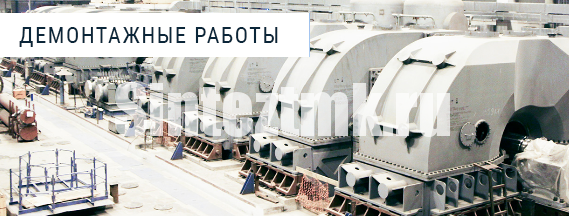
Dismantling the generator
Dismantling of turbogenerators may be necessary during repair work or disposal. Such units are produced under the conditions of each power plant, used for decades, because, given the high cost of their transportation, it is inexpedient to transport them for operation at another facility.
Repair of such generators is carried out by companies specializing in such services. If there is a need to repair the rotor or rewind the stator windings. All work is done with the generator stopped and after the power outage. The casing is removed from the generator, closing access to the generator nodes. Further dismantling is carried out as necessary repairs. At the same time, mechanisms with a high load capacity may be needed to ensure the dismantling of the stator and rotor.
During recycling, the generator can be disassembled using a metal cutting tool. First, all casings, covers and other moving parts are removed. After that, the mounts are cut off and all parts of the generator are removed and disassembled by the materials of manufacture.
Dismantling of diesel generators may also be required when transporting to a new location. At the same time, disassembly should be performed carefully so that the possibility of subsequent installation is preserved.
The diesel generator set consists of an engine and a generator, so both units are to be dismantled. The following operations shall be performed to disassemble the installation:
- Power outage, cessation of fuel supply;
- disconnection and dismantling of the battery;
- Remove the cover and casing, disconnect the control panel;
- To dismantle the engine, wires are disconnected from it;
- The bolts connecting the engine to the platform are unscrewed;
- The case of the generator is removed, the bolt of the engine and generator mounting is disconnected;
- The engine is attached to the crane hook or lift and rises;
- The generator connections are removed;
- The bolts that fix the generator are unscrewed;
- Remove the cover protecting the generator fan;
- The generator shaft is fixed with a lever so that the bearings are not damaged;
- If the generator is not disconnected from the engine, it is time to do so by unscrewing the bolt.
- The generator is attached to the lift, held on weight, moves along the axis back and rises.
The order of dismantling may differ for different types of generator. Do not disassemble the unit to a greater extent than is required for the tasks.
Depending on the size, the equipment and mechanisms for lifting the generator and its parts are selected and calculated. For these purposes, you will need cranes, pavements, towers, gantry, portal lifts, various jacks, winches, telfers, thalis.
On the body of the generators, ears are provided for mounting slings. Using rim bolts when lifting the unit is prohibited. The manufacturer’s documentation indicates the sling scheme and recommendations for moving the unit.
The generator setup is mounted on a platform that facilitates movement within the workshop. A lift or loader is used to lift the equipment. You can move the installation by pushing it with the help of a forklift, laying boards on its fork, preventing damage to the generator casing and distributing the applied force. Oil sliding channels can be installed to facilitate movement on the generator frame.
It is much more difficult to perform rigging work with the weight of the units of the unit exceeding 100 tons. In the shops are rarely located lifts with a carrying capacity above 50 tons due to the lack of space. In this case, various options are possible. When installing a bridge crane with a mounting winch, the load is evenly distributed between the cargo trolley of the crane and polypast, which allows for lifting a load of 100 tons with a carrying capacity of each of them 50 tons.
To lift a stator weighing 150 tons, two gantry cranes with a carrying capacity of 75 tons each can be used, and two traverses suspended one for two hooks of the first crane, and the second for the hook of the second and for the first traverse. With the well-coordinated work of all mechanisms and professionalism of workers, the rise of the stator passes without problems.
If when moving the stator of the generator door or window openings in the shop do not allow to carry such a voluminous object, disassembly of part of the wall or roof of the shop is carried out.
The manufacturer provides problems with the implementation of rigging work, and delivers specific equipment together with the generator. These can be special stops necessary for lifting the stator, a trolley for mounting the rotor in the stator, mounting stands.
Rigging and transportation of the generator
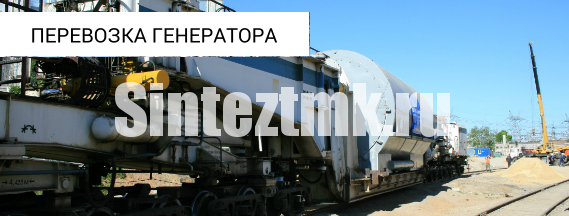
Depending on the size of the generator, the method of its delivery is chosen. If the dimensions and weight permit such carriage, a conventional onboard vehicle or rail platform shall be used. The main requirements are imposed on packaging, fastening. The generator station is mounted on the base with a rigid frame, which should be tightly located on the car platform. The generator rotor should be fixed.
For a mobile generator station, towing is used during transportation. It is important that the power of the car was sufficient to tow such cargo. It is necessary to take into account the decrease in maneuverability and efficiency of braking during towing, as well as the need to install the necessary signs at the station.
Transportation of large turbogenerators is made in disassembled form. The greatest difficulty can cause transportation of the stator, the largest node of the generator. The rotor and other parts are much smaller and lighter.
When transporting a generator stator with a length of 5 meters with a diameter of more than four with a weight of 102 tons, a special railway platform, a platform transporter will be required. In particularly difficult cases, articulated transporters are used. The disadvantage of this type of transportation is the increased load from the weight of the stator itself and the thrust of the car, which should be taken into account during installation during testing.
If it is not possible to use railway transport on the entire route from the place of production to the point of installation, it is necessary to provide for reloading to a car with a special platform.
The route of transportation of such oversized and heavy cargo as the generator stator is developed in advance and coordinated with all services related to transportation. The road surface along the way should be strong and smooth, without holes and potholes. If necessary, the shoulders are pre-strengthened, and a new road surface is laid.
Transportation time is calculated minute by minute based on traffic intensity. When transporting the generator stator, special vehicles are escorted, if necessary, the movement of machines in certain areas is limited.
Throughout the route, the presence of oversized items that are difficult to transport is checked. Advertising or road signs located above the road are temporarily dismantled, power lines are raised if possible, bridges of insufficient carrying capacity are strengthened or bypassed.
Installation of the generator
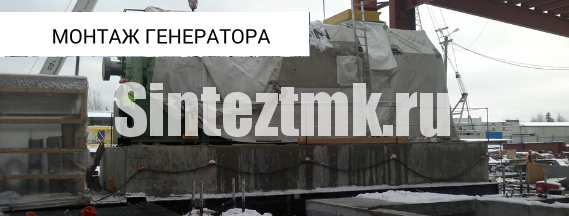
Installation of the generator is made on the foundation, the dimensions and characteristics of which are specified by the manufacturer depending on the model. The foundation must be prepared by the time the generator is delivered to the installation site.
Unloading of the unit is carried out on the installation site near the installation site. Here, the generator is accepted, as a result of a thorough inspection, the completeness and integrity of the nodes are checked. If installation is not planned immediately, the unit is stored.
Before installation, the quality of tightening of bolts, the presence of wire insulation is checked. Packaging and all fixing devices during transportation are removed. The rotor should rotate freely and smoothly if pushed by hand.
It is necessary to check whether the power supply of the generator is disconnected, disconnect the battery or air supply for pneumatic starters. You cannot lift the generator behind the fan shaft.
If the design of the generator has two bearings, they are connected to the drive directly through an elongated shaft with a veneer groove and an elastic coupling. To reduce vibration, it is necessary to set the ratio of the generator with the drive as accurately as possible. The legs of the generator are attached to the base, the alignment of the shafts is provided thanks to the linings under the paws.
In generators with one bearing, the connection to the engine drive is due to the steel disks attached to the shaft by bolts. On the surface of the discs there are holes that coincide with the thread in the flywheel of the engine. The fastening of the disk to the flywheel is carried out by bolts with washers. Due to the accuracy of fastening, there is no need to adjust the alignment of the shafts. The legs of the generator are attached to the wall with bolts, linings can be placed under them. The vibration of this design is minimal.
Turbogenerators are supplied by separate units, the installation of which is carried out by experienced specialists. Installation of such a unit requires large costs and takes a long time.