

-
The installation of metal-cutting machine tools is one of the most sought-after services in the field of industrial equipment transportation today.
Metalworking became an independent branch of heavy industry quite long ago, developing in step with innovative advances.
The use of CNC machines in production has long become the norm, and the rigging of such machines, the methods of their dismantling (installation) and their full or corrective relocation within the production area are constantly being improved.
Metalworking machines include all mechanisms on which the required workpieces are machined in order to change the surface configuration by removing chips or by deforming the surface, using the plastic properties of the metal.
Metal-cutting machines may also be used to give the machined surface a smooth shape or to burnish it with a roller tool.
By the nature of the operations performed and the cutting tool used, metal-cutting machines are divided into the following groups:
- lathes, including those with numerical control (CNC);
- drilling and boring machines, including CNC;
- grinding machines, including CNC and polishing;
- combined;
- gear-cutting and thread-cutting;
- milling, including milling-drilling and milling-drilling-boring with CNC;
- planing, slotting and broaching;
- cutting-off;
- miscellaneous.
By technological features, machines are distinguished as:
- universal, including CNC, used for various machining of parts of many types;
- general-purpose — for performing specific operations on parts of many types;
- specialised — for machining parts of a single type;
- special — for machining one specific part.
By weight, machines are divided into three categories:
- ordinary, weighing up to 10 t;
- large, weighing from 10 to 30 t, except for internal-grinding, lapping (honing) and gear-cutting machines, for which the maximum weight is 20 t;
- heavy, weighing from 30 to 100 t, except for the categories listed in group "b", for which the minimum weight is 20 t.
By accuracy, machines are divided into five classes:
- class N — machines of normal accuracy (most universal machines belong here);
- class P — machines of increased accuracy, made on the basis of normal-accuracy machines but with higher requirements for the precision of the critical parts and the quality of assembly and adjustment;
- class V — machines of high accuracy, achieved through the special design of individual units and high requirements for part precision and for the quality of assembly and adjustment of the units and the machine as a whole;
- class A — machines of especially high accuracy, manufactured under even stricter requirements than class V machines;
- class C — especially precise machines or master machines, intended for making the parts that determine the accuracy of class A and V machines.
To ensure the required accuracy, class A, V and C machines are installed in special thermally constant rooms (with automatically controlled constant temperature and humidity).
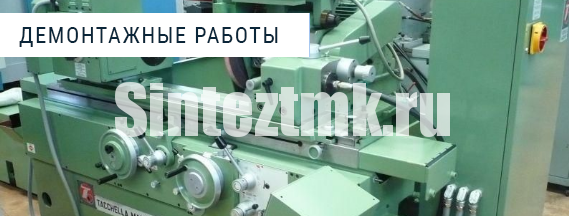
Dismantling of metal-cutting machines
The dismantling of metal-cutting machines includes the following types of work:
- Carrying out dismantling works on the equipment;
- Dismantling works on the device's foundation;
- Packaging and preservation of individual units and systems of the metal-cutting machines;
- Moving them using special rigging devices and loading the equipment onto a vehicle (low-bed platform, road trailer, railway transporter, etc.);
- Transporting the metal-cutting machines to the installation site;
- Carrying out unloading of the metal-cutting machines at the delivery point and relocating them, using machine rigging, to the assembly point;
- Installation of the metal-cutting machines.
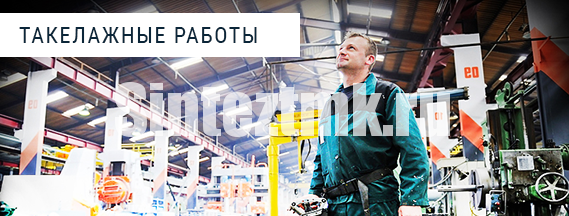
Rigging of metal-cutting machines
The rigging of metal-cutting machines is best carried out using special equipment for lifting loads of this type. Low-wheel-frame freight platforms designed for these purposes are often used for this.
These transport platforms have an increased load capacity and a wider working surface. However, before the rigging of a machine that needs to be transported, it must be packaged properly.
Each part must be marked and packaged for the subsequent installation, which must be carried out within a short time.
To carry out the rigging works of lifting and moving metal-cutting machines onto the base of low-bed transport, specific technical tooling is used, ranging from industrial crane beams, hoists, tackles and inertial lifts (jacks) to cranes and gantries.
The next stage of the rigging works is the transportation of the machine equipment. Here it is important to correctly secure the machine equipment on the freight vehicle for subsequent transportation.
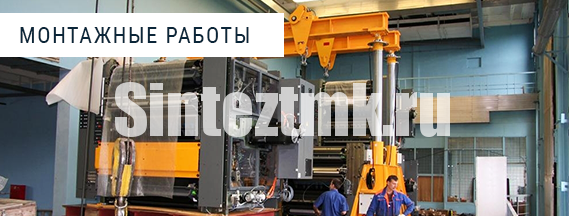
Installation of metal-cutting machines
The final stage is considered to be the installation of the metal-cutting machines in the new installation area previously designated for setting up the mechanical unit.
This requires a preliminary cycle of works to lay communication lines and to prepare the frame for machines of this particular type.
In parallel, the access ways for freight machinery and the temporary installation areas for assembly works are prepared.
Only after the installation of the machine equipment is the operability of the mechanical units checked.

Regulatory documents
Regulatory documents to be followed for the dismantling, rigging, transportation, installation and commissioning of the machine tool:
GOST 12.3.009-76 «OSSS. Loading and unloading works. General safety requirements»
Guidelines for fastening process equipment with foundation bolts (SN 471-75)
GOST 24379.0-2012.Foundation bolts. General technical specifications.
SNiP 3.05.05-84 Process equipment and process pipelines
VSN 362-87 Manufacture, installation and testing of process pipelines up to 10 MPa
SN 527-80 Guidelines for the design of steel pipelines up to 10 MPa
Collection E26 Installation of process pipelines
We will professionally carry out the rigging of a metal-cutting machine in Moscow and the Moscow Region, as well as dismantle the metal-cutting machine, install the foundation for it, and perform its maintenance and modernisation.