

-
For power-supply enterprises and organisations, the question of transporting and rigging a transformer arises quite often. After all, new residential developments are being actively built and populated.
The number of power consumers is growing, which leads to an overall increase in the consumed current capacity that can only be provided by higher-power transformers installed to replace less powerful units.
When carrying out such work to replace transformer devices, a whole range of technologically complex operations must be performed.
In particular, using hydraulic pushers:
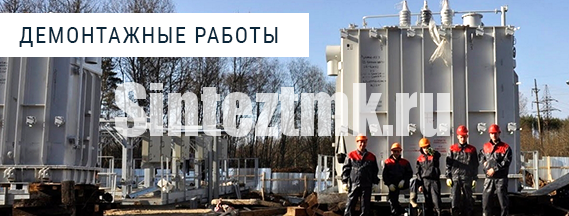
Transformer dismantling
The dismantling of a power transformer includes the following types of work:
- Moving it using special rigging devices and loading the transformer equipment onto a vehicle (low-bed platform, road trailer, railway transporter, etc.);
- Transporting the transformers to the installation site;
- Carrying out unloading of the transformer equipment at the delivery point and relocating it, using transformer rigging, to the assembly point.
- Installation of the transformer, the cost of which depends on the scope of work performed on the previously prepared base.
- Draining the oil fully or partially;
- Carrying out dismantling works on the equipment — removing the gas-analyser relay, the industrial thermometer, the expansion tank, the safety pipe and other items mounted on the transformer cover;
- Dismantling works on the device's foundation;
- Packaging and preservation of individual units and systems of the transformer device to prevent the ingress of dust and moisture;
This is what the dismantling scheme for transformers of various types looks like.

Transformer rigging
In terms of the scope of operations performed, the rigging works and transportation of power transformers represent the moving of transformer equipment that belongs to the category of oversized, heavy cargo, so all restrictive measures associated with non-standard cargo transportation must be observed here.
As for transformer rigging, its securing on the mobile freight platform and the manner of using lifting mechanisms when loading onto low-bed platforms or low-loaders depend on its weight and linear dimensions, the condition of the roadway along which the transformer device will be transported, and other factors affecting the safety of the equipment during the move.
The carrier takes on the preparation of travel documents and special permits for transportation, including the escort services of a traffic-police vehicle.
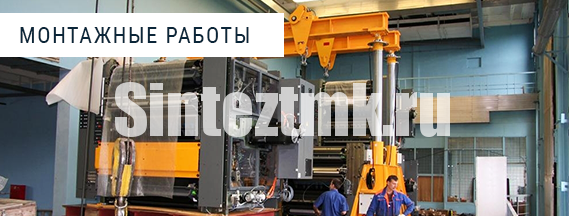
Transformer installation
At the installation point, the power transformers are freed from their crates and packaging, and the units and mechanisms prepared for storage are unpreserved and thoroughly wiped down, removing dirt, dust deposits and moisture using rags and degreasing compounds. Where there are corroded areas, they are cleaned and treated with an anti-corrosion coating.
By visual inspection, the absence of defects and of porcelain bushings on the primary output contacts is checked; the air dehumidifiers, oil filters and liquid indicators are checked, and the integrity of the manufacturer’s seals is verified. Any detected defects are corrected during the installation works.
Also by visual means, the transformer seals are checked, and the oil is checked for leaks between the base device and the cover, between the oil-expansion device and the cover, as well as on the secondary contacts, in the joint area of the oil-gauge sensor elements and the primary winding seals.
If a leak is detected, the bolted connections are tightened more firmly around the perimeter of the item, but by no more than 1/6 of a turn per turn of the wrench. Improving the fastening of a single bolted connection is prohibited because of a possible defect in the porcelain cover.
If it is impossible to stop the oil leak, a complaint report is drawn up and sent to the manufacturer to take measures for replacing the equipment and compensating for the costs incurred.
Next, during transformer installation, the oil level is checked by the gauge, as is the condition of the air-drying indicator with silica gel and the oil readings in the air-dehumidifier seal.
If necessary, oil is topped up in the transformer and the air dehumidifier. When performing this operation, the possibility of fine particulate matter getting into the oil must be ruled out. If the silica gel changes colour, it is also to be replaced.
At the final stage of installing power transformers, the following types of electrical installation work are carried out:
- A technical box with clamping devices is mounted and fixed on the installation support;
- The final tightening of all bolted connections is carried out;
- Using electric welding equipment, the metal gaskets under the transformer devices are welded around;
- The transformer devices are earthed (the metal earthing strip is fastened to the posts with a power-actuated tool, welded to metal structures by electric welding, and fixed to the equipment with bolted connections);
- Cable couplings temporarily removed during transportation are installed;
- Secondary cable lines are laid and connected;
- Metal surfaces in damaged places are restored with varnish and paint, and the earthing buses are painted in a warning colour;
- The transformer devices are connected to the high-precision busbars; here it is important that even in bad weather the length of the descent to the device should provide the necessary pulling force on the contact connector horizontally. In the output plane of the primary winding of the transformer device, this value is determined individually for each device, depending on its make and power;
- The workplace is cleaned up.
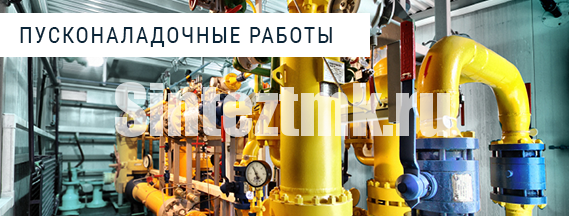
Transformer commissioning
This commissioning of the transformer serves to test the main characteristics of the product and its components before the operating period of this complex electrical device begins.
Some testing and measurement work is carried out during the installation of power transformers to find latent defects, while other measurements are taken after installation and filling with oil.
Such transformer commissioning works include:
After the commissioning works are completed, documents are prepared for the full operation of the transformer device in working mode.- Measurements of the insulation layer indicators, which determine the overall condition of the device's insulation and are carried out in a strictly defined sequence;
- Measurements of no-load losses;
- Measurements of the active-type resistance of the windings;
- Measurements of the insulation layer indicators with applied current;
- Measurements of the transformation ratio and determination of the contact subgroups of the transformer windings.

Regulatory documents
Regulatory documents to be followed for the dismantling, rigging, transportation, installation and commissioning of the transformer:
GOST 12.3.009-76 «OSSS. Loading and unloading works. General safety requirements»
Guidelines for fastening process equipment with foundation bolts (SN 471-75)
GOST 24379.0-2012.Foundation bolts. General technical specifications.
SNiP 3.05.05-84 Process equipment and process pipelines
VSN 362-87 Manufacture, installation and testing of process pipelines up to 10 MPa
SN 527-80 Guidelines for the design of steel pipelines up to 10 MPa
Collection E26 Installation of process pipelines
We will professionally carry out transformer rigging in Moscow and the Moscow Region; we also have partners across Russia and the CIS countries, and we will dismantle the transformer, install a foundation for it, and perform its maintenance and modernisation.