
-
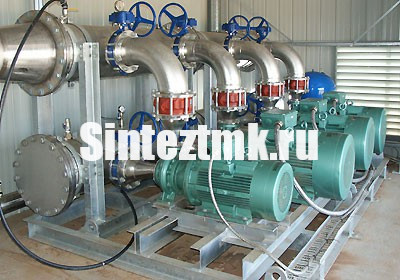
Company Synthesis TMK. offers services for installation, repair and maintenance of industrial circulation pumps of high performance.
Types of Circulatory Pumps
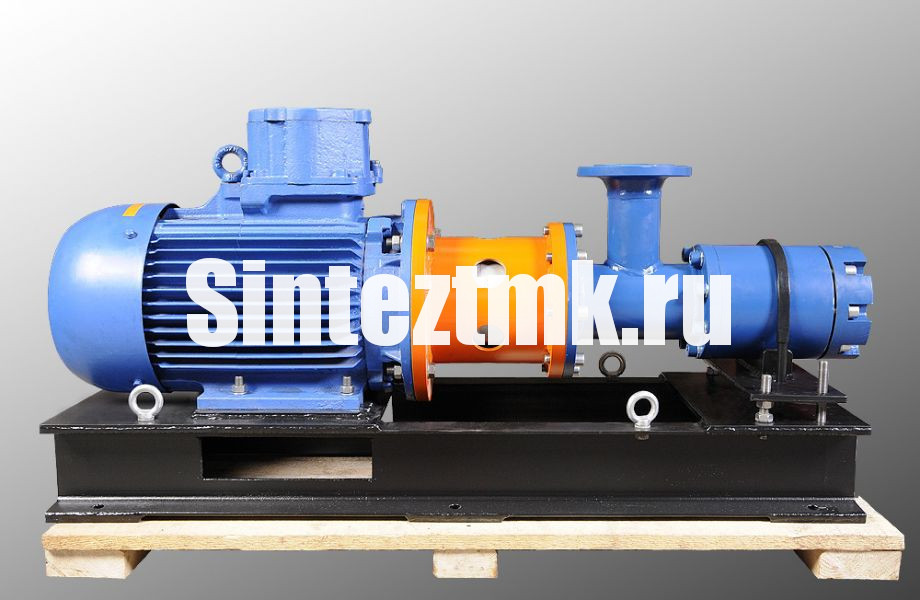
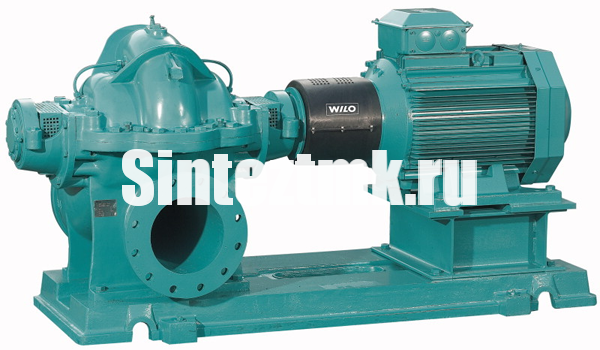
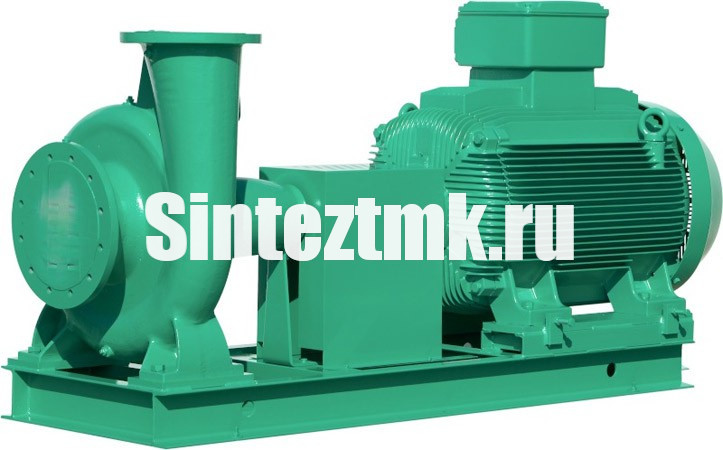
Industrial circulation pumps are the most common units used to pump any kind of liquid. Like their more compact household counterparts, mainly used in country houses of various storeys and areas, industrial circulation pumps work in systems where it is necessary to ensure the movement of the pressurized environment. In the case of heating systems of industrial buildings, the use of circulating pumps in them allows much more efficient use of energy consumed for heating and, accordingly, increase its efficiency.
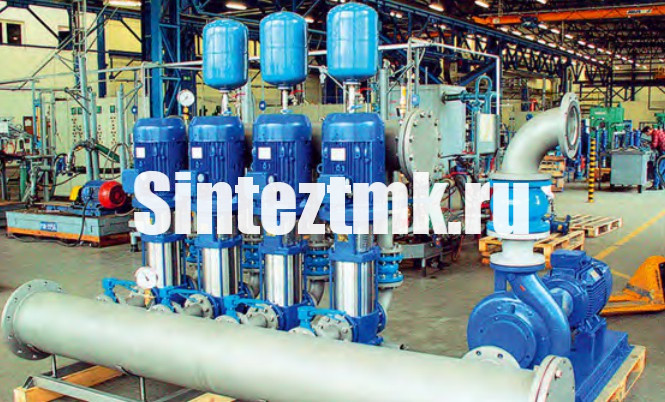
Industrial circulation pumps are also used in cooling and air conditioning systems, ventilation, sewage treatment plants, for pumping liquids between tanks in the chemical, mining, petrochemical and oil and gas industries, the housing and communal services sector and many others.

Currently, industrial circulation pumps of both Russian and foreign manufacture are on the market. Large production of this equipment is located in Germany, Denmark and Italy, but in recent years their positions are actively pressed by Russian and Asian manufacturers. In short, the choice of circulating pumps is more than wide.
According to the principle of their work, circulation pumps are divided into “dry” and “wet”. In the first case, the rotor with the working wheel is in the liquid that it pumps. In the second case, the pump motor has no contact with the pumped medium. The clear advantage of the first pump is low noise, the second – high performance and efficiency.
Preparatory stage of work
At the preparatory stage of installation of the circulating pump, the company’s specialists Synthesis TMK. study the technological layouts of industrial facilities, the condition and conditions of connection to in-house engineering networks, as well as projects for their placement. In addition, the passports of the pumping equipment provided by the manufacturer and its instructions for installation, operation and repair are examined. Also, before the start of the direct implementation of works on the installation or repair of circulating pumps, our specialists develop an installation project, a project of foundations, a project of technological pipelines and PPR for these types of work.
Installation of the Circulatory Pump
Industrial circulation pumps are overwhelmingly high-performance units driven by an electric motor. They can be mounted both in the room of the pumping station with other pumps, and in a separate room. Can be installed both on the common foundation and on the own foundation of the pump, made of reinforced concrete of high grades.
Sometimes, to install pumps, it is necessary to perform installation platforms and installation platforms that withstand dynamic loads from equipment and vibration.
Before installation, the pumping equipment undergoes an audit, visual inspection and reopening. Lubrication is laid in the case of bearings, the completeness of electrical equipment is checked. When installing an electric motor and a pump on the foundation, its position is verified in two planes. An intermediate shaft is then installed. When the unit is fully assembled, the power supply system, pipelines are connected to it and the final centering is performed. Only after this procedure, the foundation bolts are finally tightened.
Synchronous electric motors of high power are most often delivered to the installation site in disassembled form. Accordingly, this unit also requires assembly, during which it is necessary to consistently perform a number of responsible actions related to checking the geometry of the installed equipment and its alignment.
As a rule, pumps of medium and low performance are mounted on a common frame. High performance pumps are mounted on different foundations. More precisely, the pump is installed on the frame, and its electric motor on the mounting stove. After the installation procedure is completed, the pumping equipment is tested and commissioned. Before the first start, its entire oil system and cooling system is blown, washed and tested under a pressure one and a half times higher than the design pressure, and the exact value of the test pressure is indicated in the design documentation. After that, the main pump is run-in, necessarily filled with working fluid. The test results are formalized by the relevant act, recorded in the executive documentation, after which the equipment is transferred to the customer’s operation services.
REPORT AND SERVICE OF THE Circulation Pump
The specificity of this type of equipment is that the pumping units constantly work under load with small technological interruptions. This circumstance imposes on circulating pumps, increased requirements for reliability, reliability and repairability. The latter requirement is especially relevant for petrochemical and mining enterprises, where each hour of downtime costs tens or even hundreds of thousands of dollars.
Accordingly, this equipment, like no other, needs both planned and preventive repair, since the pumps are subjected to mechanical, corrosive, erosion, and in some cases thermal wear.
Planned inspection of pumping equipment is advisable to carry out every 250 – 300 hours of its operation. Specific requirements for frequency are specified in the technical documentation. Basically, it consists in the revision of bearings and their crankcases, glands, impellers, washing, purging and cleaning of pipelines, as well as checking the condition of the body of the unit, its attachment to the foundation plate, as well as centering.
The current repair of the circulating pump is carried out after 800-850 hours of continuous operation of the pump and involves much more work. Specific requirements for the periodicity of current repairs are also specified in the technical documentation. To begin with, at least, that the unit is completely disassembled and its details are carefully examined. Technological backlashes and gaps are checked. Identified defects are recorded in the journal. During the current repair, as a rule, rolling bearings, sealing gaskets, less often protective sleeves are subject to replacement. If necessary, the oil is replaced.
Once every six months, an average repair of the circulating pump is carried out. It includes all, without exception, the work of current repairs and some other manipulations. With such repairs, all consumable spare parts are to be replaced, the condition of individual units, gaps is checked, and in addition, the rotor beat, the state of electrical windings and electrical equipment are studied.
Of course, all the procedures described above can be neglected, saving a small amount of money, but you need to understand that the need for major repairs of the circulating pump can occur after 10,000 hours of operation, and after 30,000. There is a noticeable difference between these figures. The final volume of overhaul of the pumping equipment is determined based on the degree of wear of the components and units of the pump. But, as a rule, during major repairs, the unit is disassembled, replaced or restored all unacceptably worn-out parts.
The emergency stop of the circulating pump practically guarantees its overhaul. But even from this sad event, there is a certain benefit: the overhaul of the equipment can be combined with its modernization.
Why are we?
Company Synthesis TMK. has extensive experience in installation, repair, as well as maintenance of the most diverse pumping equipment of high performance.
- Order a circulation pump installation service.
- Term of work from 10 (ten) working days.
- Guarantee for completed work 2 years.
- The staff includes 7 project managers with two higher technical educations, 5 manufacturers of installation works of technological equipment with 5 years of experience.
- We reduce the cost of installing circulating pumps to 15 percent.
- Contact by phone or send an application by e-mail.
Our specialists will carry out work in a short time with guaranteed high quality. Our prices for the installation of circulating pumps are competitive and absolutely reasonable. By entrusting the installation or repair of circulating pumps of our company, you save yourself from the need to eliminate the consequences of improper attitude or elementary unprofessionalism. The most innocuous thing that this can lead to is not achieving the estimated efficiency and productivity of pipelines and highways. For example, in the case of heating systems, this is guaranteed to result in increased energy costs and additional costs. And with the most unfavorable development of events, an improperly installed pump will simply fail quickly and it is far from the fact that during the overhaul it will be possible to eliminate all the consequences of errors made during its installation.
Normative documents
GOST ISO 17769-2-2015 “Liquid pumps and installations”
EN 16297-3-2015 Energy efficiency. The circulating pumps shall be leakproof.”
GOST R 56477-2015 “Energy efficiency”. Pumps are self-contained non-alcoholic circulation pumps.”
GOST 20791-88 “Centrifugal hermetic electric pumps”.
GOST 31839-2012 “Pumps and units pumping liquids”.
GOST R 563532-2015 “Oil and gas industry”. Production, storage and transfer of oil, petroleum products and liquefied natural gas.”
SNIP 3.05.05-84 “Technological equipment and technological pipelines”.
SNIP 41-01-2003 “Heating, ventilation and air conditioning”.
SP 30.13330.2012 “Internal water supply and sewerage of buildings”.
SP 31.13330.2012 “Water supply”. Outdoor networks and installations.”
SP 8.13130.2009 “Sources of external fire water supply”.
SP 54.13330.2011 Residential multi-apartment buildings.
SP 253.1325800.2016 Engineering systems of high-rise buildings.
SP 124.13330.2012 “SNIP 41-02-2003 Thermal networks”.
SP 73.13330.2012 “Internal sanitary and technical systems of buildings”
2.35.73-2012 Engineering networks of high-rise buildings. Integrated safety systems for high-rise buildings and structures.”
2.15.70-2012 Engineering networks of high-rise buildings. Device of heating, heating, ventilation, air conditioning and refrigeration systems.”
2.15.3-2011 Engineering networks of buildings and structures internal. Device of heating, hot and cold water supply systems. General technical requirements.”
-