

-
Transportation and installation of a gas turbine, a popular service in the energy industry.
Any technological mechanism over time either becomes obsolete or wears out. In both cases, it is necessary to replace it with a new unit.
This fully applies to gas and steam turbines of thermal power plants.
However, to make a replacement, it is necessary to dismantle the steam or gas turbine and tow it for repair or disposal.
Our specialists have experience in carrying out the whole range of works related to transportation and installation of gas and steam turbines.
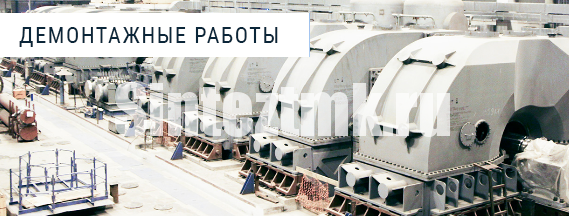
Dismantling of steam (gas) turbine
Dismantling work should be carried out by specialists – repairmen with a high degree of qualification, because the turbine equipment is a complex of complex control and measuring equipment and its removal should occur without damage and under the supervision of specialists.
Dismantling of the steam / gas turbine is carried out after the release of the turbine from the equipment. After that, disassemble the foundation and excavate the product from the seat. In parallel, work is being carried out with the rigging of steam / gas turbines, because without these auxiliary mechanisms and devices, it is simply impossible to carry out dismantling activities.When working on such a plan, not only technological plugs for the removed control equipment should be attributed to the rigging of the steam / gas turbine, but also various mounts that help the dismantling process. The rigging equipment includes the needle (or other type) cranes, with the help of which the dismantling of the steam / gas turbine is carried out, and the means of transportation of products, which are designed to carry out transportation of steam / gas turbines to the destination.
In the production of dismantling works, accurate data on the weight and brand of the turbo complex are required in order to determine the carrying capacity of cranes and special equipment for transportation.
Steam (gas) turbine rigging
Rigging and transportation of steam / gas turbines begins from the moment of mounting the product with the help of rigging equipment (cords, stoppers and other fasteners) on the transported site. Depending on the choice of method and transport, it can be a dry cargo deck, a railway transport platform or a multi-axle road train.
Transportation of such products can be carried out, both disassembled and assembled. With the apparent simplicity and ease of rigging and transportation of steam / gas turbines in the uncompleted state, the problem of the upcoming installation of steam / gas turbines into a single whole on the installation site arises.
In addition, the manufacturer’s TUs may not correspond to this type of transportation due to a violation of the technological process of assembling the unit in an unprepared place (lack of sterility, the possibility of moisture and dirt-dust deposits on turbine equipment, etc.). Therefore, as a rule, transportation of steam / gas turbines is carried out in the form of an assembled unit.
For this purpose, special road trains equipped with multi-axle platforms of modular type are involved, and 28 axle transporters connected to a single mobile composition are used for such transportation by rail.
Loading of the turbocomplex is carried out in the following ways:
- With the help of a crane or a group of cranes (for this purpose, a special stand is pre-installed on the cargo platform, preventing the turbine from unwinding due to its spherical configuration and the creation of longitudinal oscillations);
- Ride on the cargo platform. At the same time, the ramp should have an inclination in the loading paths, and the platform clearance (0.6 m) was as close as possible to the height of the site. At the same time, it is required to provide the cargo platform with special equipment that inhibits the inertial movement of the cargo. To prevent lateral displacement, it is necessary to fix the turbine with blocks.
After stopping the turbine on the site, it is required to fasten the product using cables at a distance of 0.5 m.
When laying the path of transportation of steam / gas turbines, it is necessary to remember that the cargo must be moved with the observance of precautionary measures, take into account the quality of the roadway, the inclination of the track, the presence of sharp turns, etc.
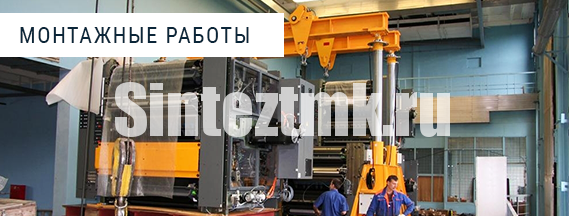
Installation of steam (gas) turbine
Installation of the steam turbine is carried out according to the following plan:
- The product is mounted on the upper site in the production building of the enterprise, in which holes are made for the body parts of the cylinders of the product and technological windows for pipelines for heaters of the regenerative principle of action, a pipe to a transition type condenser, as well as holes for steam, including and reheated;
- At the beginning of the installation of the steam / gas turbines, all components of the turbocomplex are reconfirmed, including control and measuring equipment and auxiliary units;
- Mount the bottom part of the low pressure cylinder (LDC) with a belt on rotary supports;
- On the jumper of the holes under the medium pressure cylinder (DCS) and the high pressure cylinder (HCVD) on the left side of the DSC, the bottom body parts of the rotary supports of these cylinders are mounted;
- Further, the bottom hull parts of the DSD and DVD are attached to the corresponding rotor supports, the turbine stator elements are placed in them and all the cylinders of the product are centered;
- In the rotary supports, the lower hemispheres of the support type inserts are laid, on which the rotary elements connected by couplings are centered;
- Place the required stator elements in the upper body parts and close the product with studs, tightening the bottom and upper elements of the body part along the flange connectors.
In the same way, when installing a gas turbine, rotary supports are covered. After the insulation complex of works on turbine units, the adoption of protective measures, the fence with the casing of the product, the turbine is checked for readiness for operation.
Diagnostics of steam (gas) turbine
Currently, the so-called vibration method for the diagnosis of steam / gas turbines is widespread. Practical experiments to improve vibration diagnostics and the introduction of testing complexes into the TPP operation system are considered one of the important tasks in this direction.
Practical studies show that the vibratory conditions of the turbine change when functional defects are detected and investigated. The vibratory background of the turbine begins to change. With constant monitoring, this is easily detected and allows you to maintain the reliability, economy and maneuverability of technical equipment. Diagnostics of such products makes it possible to classify a malfunction at an early stage and reduce the number of downtime at the enterprise. At the same time, the use of such diagnostics will increase the service life of the entire system as a whole.

Regulatory instruments
Regulatory documents that must be guided for dismantling, rigging, transportation and installation and commissioning of the transformer:
GOST 12.3.009-76 “SSBT”. Loading and unloading work. General safety requirements”
Guide to fastening technological equipment with foundation bolts (CH 471-75)
GOST 24379.0-2012.Basic bolts. General technical specifications.
SNIP 3.05.05-84 Technological equipment and technological pipelines
VSN 362-87 Manufacturing, installation and testing of process pipelines up to 10 MPA
SN 527-80 Instructions for the design of steel pipelines up to 10 MPA
Collection E26 Installation of technological pipelines
We will professionally produce rigging of steam and gas turbines in Moscow and the Moscow region, we also have partners in All Russia and the CIS countries, and will dismantle steam and gas turbines, install the foundation for a steam or gas turbine, carry out maintenance and diagnostics of a steam or gas turbine.