

-
Transportation and installation of tanks and tanks for refineries is a rather popular service today in the oil and gas industry.
When faced with the need to transport huge storage tanks for petroleum products, the task seems impossible. And their installation requires a special approach and has its secrets. In fact, despite the complexity of this work is quite doable, if it is taken by people with the appropriate skills and experience.
It is allowed to store petroleum products only in structures made by welding from stainless alloy steels that meet fairly strict requirements. They can be manufactured both in the factory and at the installation site. But welding is not a detachable connection, therefore, during dismantling, it is necessary to organize the transportation of collected containers.
Depending on what substances were stored in the container, and what is planned to be poured into it in the future, rigging may have some features. The whole range of works from dismantling to assembly, including rigging and maintenance, is offered by Sintez TMK, which has the necessary equipment and has real professionals in its team.
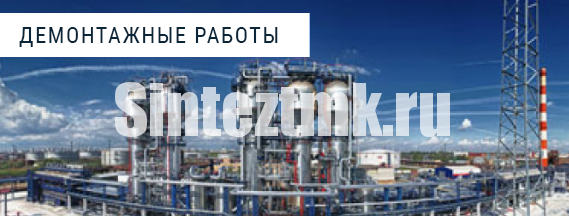
Dismantling tanks and tanks for refineries
Start dismantling of reservoirs of petroleum products should be with the pumping of liquid residues and cleaning. Each substance in storage has an effect on the metal. Therefore, there are restrictions on the use of containers. Even after removing the chemicals and washing, it is impossible to pour food liquids into the container.
To begin work, it is necessary to make a PP for dismantling the tank, which takes into account specific conditions, design parameters, initial tasks. The customer is required to set the task as accurately as possible and give all available documentation. Only in this case, the probability of quality work will be maximum.
A special approach requires dismantling tanks from under specific chemicals. Each fluid may have specific requirements. So the residues of serocarbon must be squeezed out with water because of the danger of explosion.
Standard tank dismantling technology and work plan consists of a number of operations:
- Obtaining a work permit;
- Clearing the place, providing access to the object and laying roads for the entrance of the necessary equipment;
- Equipment for disassembly is installed, the necessary mechanisms are supplied;
- The container is cleaned of garbage, cables and communications are turned off.
Further, during liquidation, the structure is cut into fragments, in preparation for transportation, it is attached by slings to the lift, separated from the supports and moved to transport. Dismantling underground tanks often requires excavation work, after which the structure is raised to the top and temporarily located on the foundation or immediately loaded onto the car.
Some features have work on dismantling special types of containers:
- With such works as the dismantling of gas station tanks should be handled carefully, since it is very difficult to conduct a qualitative assessment of the condition, and gasoline vapors that are dangerous to health can accumulate inside.
- When dismantling the gas reservoir located underground, you need to remove the soil poured from above, clean not only the removed, but also the containers located in the vicinity and perform the lift with the help of masts.
- The same should be done when dismantling gasoline tanks.
- Dismantling of fuel oil tanks.
- Dismantling bitumen tanks located on the ground is complicated by the need to clean them up.
- The dismantling of casemate tanks provides for additional dismantling of the concrete fence.
- The dismantling of the reinforced concrete tank does not provide for the further use of a solid structure, but is completely disassembled.
Works of such complexity as the dismantling of gas tanks or fuel tanks, performed by professionals, will ensure maximum effect and will allow you to use the results in the future.
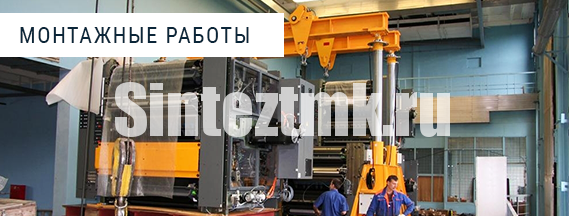
Installation of tanks and tanks for refineries
To carry out the installation of reservoirs of petroleum products requires preparatory work and they can be carried out on the surface and underground, depending on the type of design. After setting the task and studying the situation, the PP is made for the installation of the tank, providing for installation conditions, capacity features, foundation drawings and calculation of the labor intensity of work.
Roads are brought to the place of work, and free access to special equipment is provided. Tanks are installed on a pre-established base. The container is securely fixed in the working position, if necessary, strengthened with the help of soil.
For different tasks, different tank installation technology is used. For petroleum products, installation of underground tanks with additional natural thermal insulation at the expense of the earth layer is especially popular.
In this way, the following works are carried out:
- installation of filling stations tanks, for which an additional advantage will be saving space on the territory;
- installation of a gas tank having large volumes and especially sensitive to overheating;
- Installation of casemate tanks half-deep in the ground combines the simplicity of design with the advantages of underground storage.
Ground structures do not require excavation work, can be installed quite quickly.
They are practical and easy to maintain. These include:
- installation of bitumen tanks, characterized by high strength and high capacity;
- installation of ground-type gasoline tanks, often more convenient for filling and dispensing fuel;
- installation of reinforced concrete tank, used as a water tower, contains a cylindrical container, deepened into the ground;
- Installation of fuel oil tanks used at the CHP for storing volumes of reserve fuel.
When choosing the method of installation of fuel tanks, the decision is often made on the basis of personal preferences of the customer and the restrictions imposed in this area by climatic, economic, regional features. Installation of gas tanks does not depend on external factors and is carried out in accordance with the requirements of standards.

Rigging of tanks and containers for refineries
If it is necessary to perform the rigging of the tank and container, the labor intensity of the work depends on the size and relates to the transportation of overall cargo. Such operations are performed only by organizations with similar experience and resources. When transporting a tank and a container, it is required to have lifting equipment designed to lift heavy objects, vehicles capable of transporting such structures and personnel that ensure the rigging of tanks.
The complexity of rigging gas tanks is in their dimensions. This capacity can hold up to 200 thousand liters of liquefied gas and requires special transportation conditions.
The rigging of gas station tanks does not require such radical measures as more complex rigging of the gas tank, but also involves coordinating the route and obtaining a permit for transportation. If we are talking about above-ground structures, then during transportation, escort by special vehicles is not always necessary, unlike the rigging of underground tanks, which have more solid dimensions.
The rigging of bitumen tanks is complicated by their height, so during transportation you will have to choose a special transport for the transportation of long and oversized cargo. Characteristics of the cargo impose differences on the rigging of casemate tanks with a large diameter. When transporting them without traffic police can not do, since the diameter of the container is up to 5 meters.
Unlike the rigging of gasoline tanks, the rigging of the reinforced concrete tank is reduced to the construction of a new monolithic structure. This is the cheapest type of work, but such a design can cause problems during operation.
Both the rigging of fuel oil tanks and the rigging of fuel tanks require careful preparation, the use of special equipment and the professionalism of employees. With a clearly defined task, Sintez TMK will always find the optimal solution to any problem.

Maintenance of tanks and tanks for refineries
It is not enough to bring and install equipment for storing petroleum products. Without maintenance of the tank and container, they will quickly become unusable, without even serving a warranty period. It is necessary to conduct regular inspection of structures, but sometimes it is very difficult to find a responsible specialist with the appropriate qualifications.
It is always possible to order tank and tank maintenance from Sintez TMK, which provides control and maintenance of the technical condition of the structures. If tank maintenance is carried out regularly, this will avoid the cost of premature dismantling and replacement capacity.
Maintenance of gas tanks located underground is very difficult for a layman. To do this, it is necessary to have special equipment for monitoring pressure and measuring parameters in the tank.
Maintenance of filling stations tanks will allow detecting impurities in stored fuel in time and taking appropriate measures. It is necessary to perform maintenance of underground tanks regularly, otherwise, in addition to replacing the capacity, you will have to lose a certain amount of fuel.
Maintenance of the gas reservoir is usually carried out by specialists of the gas distribution company, and maintenance of fuel oil tanks is carried out by mechanics at the CHP. But when servicing bitumen tanks, subject to their single location, it makes sense to introduce a specialist in the inspection of structures into the staff. In this case, as in the maintenance of gasoline tanks, it is logical to turn to the services of professionals.
Sintez TMK will perform repair and maintenance of casemate tanks, will provide assembly and maintenance of reinforced concrete tank. Constant monitoring of the condition of structures will prolong their use. Keep in mind that the maintenance of fuel tanks is much cheaper than their replacement.