

-
Fans transportation and installation is a service that deserves special consideration, as it plays a very important role in any of the industries.
Fans used in the oil and gas industry, to which special requirements are imposed. After all, the conditions of their operation can be quite complicated. Such equipment has to work with aggressive environments, with strong dust and moisture. And the power required to perform the tasks determines the dimensions, which can be several meters in each direction.
In petrochemicals, axial and centrifugal fans are most often used. The first type involves the rotation of the blades moving air along the axis, and the design of the second includes a rotor, which when rotated directs air through a special casing.
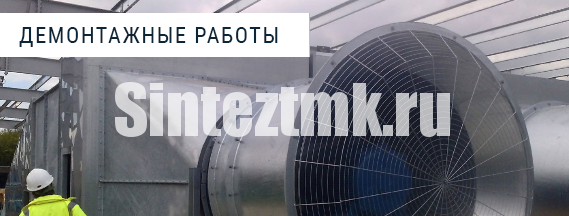
Fan removal
The need to dismantle fans may arise when they are written off or the need for transportation. Depending on the reasons for dismantling the equipment, the method, the equipment used and the packaging method are selected.
When dismantling for further disposal, the equipment includes not only conventional carbon steels, but also corrosion-resistant stainless steels, aluminum alloys, brass. After dismantling, all parts must be sorted by type of material.
To begin dismantling it is necessary to disconnect the equipment from the power supply. After that, all ducts are undocked, opening covers, hatches, wedge belts from pulleys are removed. The next stage is dismantling for details, removing the casing, dismantling the working wheel. The body is disconnected or cut off from the wall, which is removed last by cutting the foundation bolts.
If further work of the fan is necessary, dismantling is carried out in a minimum volume, only to facilitate the transportation or movement of equipment. Transportation of industrial fans up to 12 rooms, that is, up to the diameter of the working wheel 1200 mm, is allowed without disassembly. Therefore, for such units, it is enough to remove the mount from the foundation and fix the moving parts.
The peculiarity of dismantling centrifugal fans is the inadmissibility of disassembling rotating parts without the permission of the manufacturer, as this will lead to imbalance. Their subsequent installation will require the manufacturer’s permission and may prove too complicated. Large fans should be disassembled into large nodes. It is desirable to perform work in the following order:
In the case of dismantling for repair, it is enough to remove parts and components that prevent access to the repair site.- Turn off the power supply;
- Disconnect the ducts;
- Removal or weakening and fixation of wedge belts;
- Dismantling of opening covers and hatches;
- Fixing, and if necessary, separate transportation removal of a rotating shaft;
- Removal of lubrication, washing of parts;
- All removed small parts and components are packed in wooden boxes;
- Electrical equipment is dismantled and packaged;
- The foundation bolts are removed or cut off;
- The order of dismantling is fixed, the document is attached to the fan.
Dismantling and replacement of broken parts is performed.

Fan rigging
Rigging works with industrial fans are closely related to dismantling and installation, and are also produced during transshipment. The parameters and composition of the equipment used are selected in accordance with the characteristics of the unit. When calculating the carrying capacity of mechanisms and the strength of ropes, 100% reserve should be taken into account.
To lift fans will need lifts, jacks, winches. If it is necessary to overload especially heavy nodes, cranes are used. In rigging, various mechanisms can be used simultaneously.
To perform particularly complex works, a project is preliminarily performed, which gradually describes the use of equipment and equipment, the mounting scheme, the need for changes in the construction of the building. If it is necessary to make or remove from the room a unit with non-standard dimensions, it may be necessary to increase the door or window openings, disassemble the roof of the building. If the height of the room does not allow the use of lifts, the unit can be raised with the help of jacks and on the sled pulled to the right place.
On the cover of the fan case, eyelets are provided for fastening the sling, into which ropes, ropes or slings are inserted. The mounting scheme is indicated in the work plan or in the equipment manual. When fastening, knots and aggregates are tied. The success of loading and unloading operations and their safety depends on the correctness of slinging.
Difficulties can cause movement of the rotor, which during rigging should not rely on bandage rings. Under it you need to put wooden linings. Piercing should be carried out exclusively on the necks or magnetic poles on which there are no protruding groove wedges. At the place of contact, an aluminum or cardboard gasket is laid and lubricated with solidol.
Transport of industrial fans
Before transportation, industrial fans must be dismantled, packed and loaded into transport. The problem can be caused by non-standard dimensions of units, the dimensions of the body of which can be more than 5 meters in any direction, which at any location exceeds the permissible width of the cargo. An example is the successful delivery of the working wheel of the VRCD-4.5 unit with a diameter of 4.6 meters and assembled with a hub to Lipetsk.
From the point of view of transportation, fans are oversized and heavy loads, and therefore require a special approach. Even before the start of work, it is necessary to draw up a route that optimally takes into account the features of delivery from one point to another. If justified, several modes of transport may be used. For example, part of the route passes by sea or rail, and for delivery to the workshop will be used by vehicles.
The route is thoroughly checked and calculated. All the features of the road, the presence of arches and power lines, the capacity of bridges should be taken into account. If necessary, detours, dismantling of hinged advertising are provided. Wires passing over the road can be lifted for a while. If in some places the asphalt coating is damaged or of insufficient quality, repairs are carried out, curbs are strengthened and a new coating is laid.
The time of transportation of the fan is agreed to the traffic police, ordered a special vehicle for escort. If unique equipment weighing 50-60 tons is transported, a car with an appropriate platform is selected. The transportation schedule is calculated minute by minute, taking into account traffic. If necessary, sections of the road are closed for traffic.
It is much easier to transport small fans. For their transportation, you do not need dismantling, the equipment is simply installed in the body of the machine and is securely attached.
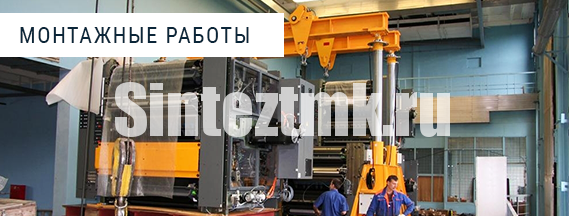
Fan installation
If the transportation of the fan is made in assembled form, then its installation does not cause problems. When preparing for the installation of the unit, you need to make sure that the conditions in the room for humidity, dust, temperature meet the requirements specified in the manufacturer’s documentation. Place for installation should provide convenient installation and access to the fan during repair work and maintenance.
Delivered equipment must be pre-inspected to identify possible damage during rigging or transportation.
In case of detection of any problems, installation and commissioning should be carried out only after agreement with the manufacturer. Installation of a non-assembly fan should be carried out in the following order:
- Connect the electric motor to the 3-phase network, perform grounding, connecting it to the ground screw located on the electric motor;
- Check the insulation of the windings, if necessary, dry it;
- If the housing should be turned to another position, turning the nuts of the housing attachment to the wall and removing the manifold, turn the housing, and then tighten the nuts;
- The course of the working wheel should be smooth, rotation without jamming and friction;
- If necessary, adjust the gaps, moving the engine along the axis;
- Make sure that the bolts are tightened reliably, especially on the mounting of the working wheel and engine;
- Perform an inspection of the fan, focusing on the likely presence of foreign objects in it;
- Put the oil in the bathtub.
- Perform a brief start of the fan. The working wheel should rotate in the direction of the arrow drawn on the body, and in the case of an incorrect direction, switch phases;
- Connect the ducts;
- Start the fan, perform control of current parameters on all windings of the engine;
- Watch the fan for an hour, gradually increase the current, opening the throttle;
- If no extraneous noise, vibration, heating is detected, it can be considered that he is ready to work.
If the fan was transported by nodes, the assembly of the unit will be added to the installation work, which is pre-produced on a separate installation site. All dismantled parts and assemblies should be put in sequence, in reverse order of disassembly. Installation of the fan casing of large sizes is made on supports, smaller units are attached to the wall. The attached documentation should contain a list of operations performed during dismantling, which should be used in the assembly of the fan.
After installing the working wheel, its balancing should be performed. If necessary, representatives of the manufacturer are involved in the work.