

-
Transportation and installation of heat exchangers is necessary both in energy, oil refining, gas, chemical and in many other industries.
In any field of activity where it is necessary to transfer thermal energy between coolants, special devices, heat exchangers are used.
These can be both small radiator plates in the home heating system, and huge industrial installations that provide technological processes.
Such units can have a large weight and dimensions, which makes it difficult to perform installation and rigging work.
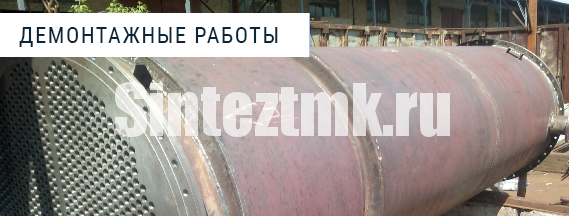
Dismantling of heat exchanger
The order of dismantling of heat exchangers depends on the reasons that caused it, as well as the design of the installation.
From the point of view of further use, there are several reasons for disassembling units:
- Complete dismantling and disposal;
- Carrying out repair works;
- Moving the installation within the enterprise to a new location;
- Selling to a new owner.
Do not think that disassembly for the purpose of disposal does not cause problems. But since it does not require subsequent assembly and preservation of the elements of the heat exchanger, it is much easier than other types of dismantling, since it does not require the preservation of the functionality of the unit.
If the heat exchanger is to be disposed of, it is enough to disassemble it into parts to be transported. Start with the removal of the working environment with mandatory washing with water, preferably warm. After cleaning the pipe beams, automation is dismantled, all removable covers, partitions and plates are sequentially removed, collapsible connections are unscrewed.
Further disassembly can occur with the help of cutting equipment. Before recycling, it is important to divide the dismantled parts by type of material, separately folding steel, alloyed and carbon steels, brass and aluminum.
When disassembling for repair, only replaceable parts or structural elements that impede access are dismantled. Disassembly should be minimal if possible.
The most difficult is dismantling for the purpose of further use of the heat exchanger, which must begin with the drain of the coolant and washing the unit. The unit is disconnected from engineering networks. Given the non-standard dimensions of the equipment and the large weight, it is necessary to remove the opening covers. All protruding parts shall, if possible, be dismantled or secured, which shall exclude damage during transport. For open flange joints, protection is provided with steel or special plastic covers.
After removing the foundation bolts, the entire structure is installed on the runners or attached with the help of slings to the lifting machine. All removed parts and components are packed to ensure their protection during transportation. The disassembly procedure must be recorded and transmitted with the equipment. The conditions of packing and loading of the heat exchanger shall be fulfilled according to the manufacturer’s instructions.
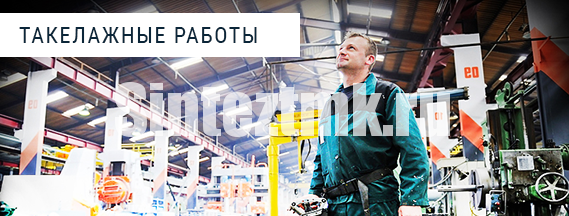
Heat exchanger rigging
When moving through the territory of the enterprise or for loading on transport before transportation, it is necessary to perform loading works that are part of the rigging. Before loading, dismantling of the equipment must be completed, conservation is carried out on the recommendations of the manufacturer. In addition to plugs on all holes before loading, it is necessary to close the flange seals with wooden, plastic or metal plugs, previously lubricating them with anti-corrosion lubricant to protect against moisture in transit.
Special plugs are put on the threaded connections, and protective caps are put on the fittings. Lubrication is also applied to bolt threads and technological holes. The expansion compensators of the heat exchanger, to prevent damage during transportation, are tightened by rods or stripes painted in a different color from the main color.
The movement of equipment is carried out with the help of lifting devices, the slings of which are attached to the welded in pairs to the upper part of the hulls or boobs. In block heat exchangers, the ears are located on the upper surface of each cover.
Special requirements are imposed on the carrying capacity of special equipment. The lift shall have at least twice the weight of the lifted load. The centre of gravity of the shell shall be below the anchorage points.
For lifting and carrying on the weight of the pipe beam from the housing of heat exchangers in the exhaust ears installed on a stationary grille, rim bolts are inserted. When calculating the exhaust eyelets, a load that is 50% higher than the weight of the pipe beam is taken into account.
If the dimensions of the heat exchanger housing do not allow free movement outside the shop, it may be necessary to break down part of the wall or increase the doorways. To take into account all factors affecting the performance of rigging work, a plan is drawn up, which indicates the lifting equipment necessary for the performance of work, the procedure for connecting slinging devices.
At the same time, the calculation of rigging work during unloading of equipment is made. At the place of arrival of the heat exchanger, it is necessary to fasten the lift slings, move to the place of installation or to an intermediate platform. At the site of the heat exchanger installation, the foundation is prepared and the equipment is carefully moved to the marked places.
Transportation of heat exchanger
Heat exchangers for the oil and gas and chemical industries have non-standard dimensions and high weight. Since the assembly of equipment is performed as much as possible at the manufacturing plant, it is impossible to provide knot transportation.
Transportation of bulky and heavy cargoes requires a special approach and qualification of the company providing such services. An example of successful transportation is the delivery of a batch of heat exchangers, each weighing up to 68 tons, from Italy to Russia by order of LUKOIL Corporation.
An important stage is the preparatory stage, at which the transportation route is drawn up, the appropriate transport is selected, the use of appropriate lifting machines is planned. If it is possible to use sea or rail transport, this option may be preferred for long distances, but requiring additional delivery by road from the port or railway station to the installation site.
Overloading at transshipment sites can be performed by gantry or portal lifts. When lifting heavy loads, railway cranes are used. The heat exchanger should be firmly fixed on the platform of the car, avoiding the slightest shift. At the same time, the centering of the cargo should be ideally calculated.
The entire route, even before the arrival of heat exchangers, is checked for the condition of the road surface, the presence and height of arches, power lines or hinged bridges, the ability to withstand the weight of the road train bridges along the route. If necessary, roadsides are strengthened, fresh reliable asphalt is laid, detours are calculated. Power lines before the start of transportation, if necessary, rise.
When transporting particularly heavy heat exchangers, the route is verified in minutes, while the passage of the road train may overlap or be limited in some areas. The traffic police permit is obtained for the transportation of a heat exchanger and a special escort vehicle is ordered.
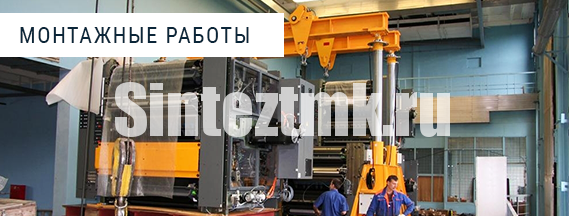
Installation of heat exchanger
The assembly of heat exchangers can be carried out only by a specially trained team familiar with the manufacturer’s instructions for installation. Place under the unit should allow a free approach from all sides for installation and subsequent maintenance. Shut-off valves shall be installed on pipes that will dock with the heat exchanger.
Before installing heat exchangers, the installation site must be prepared. For relatively small models, a solid and flat platform in the shop can be suitable. Heavy equipment requires a foundation on which metal supports will be installed. They are based on two vertically located racks, which are rigidly connected by corners.
The rolling of pipes before assembly of sections of the unit is checked for density. All removable components before transportation were marked, which will facilitate the docking of the pipe grille with the body and other components.
On nuts and studs, the thread should be covered with lubricant for ease of assembly and exclusion of jamming. The flange joints are tightened and fixed with nuts and studs.
The heat exchanger moves to the installation site, is installed on the base. After checking the parallelity of the axes, the unit is attached to the supports. All transport plugs, gaskets, tightening rods are removed. A visual inspection is performed to detect damage during transportation. Removable parts and measuring devices are installed and fixed, nuts are tightened.
When the heat exchanger is assembled, external pipelines are connected to the unit connectors. The connection shall be leakproof and shall not depressurize during thermal elongation.
Before commissioning, a number of inspections of the heat exchanger are carried out: hydraulic test and pneumatic test. Control is carried out in several stages. First, the pressure is applied to the distribution chamber with a tubular beam and separately to the housing. Then the ability to hold the pressure of the housing connected to the tube beam and then to the distribution chamber is checked. Finally, flange joints are tested.
With proper dismantling, well-conducted rigging and transportation, the installation of the heat exchanger will pass without problems, as well as further operation.
The company “Sintez TMK” provides powerful equipment, professional engineers, and most importantly – the experience of dismantling, rigging and installation of heat exchangers.